When Technology Disappears Into Your Home
Foundations of Disappearing Interaction
Calm Without Silence
Calm does not mean absence; it means signals that live at the edges of attention until needed. A gentle light swell by the coat rack, a soft temperature nudge near the window seat, and a whisper-level confirmation tone can coordinate beautifully with morning rituals. Listeners barely notice, yet feel supported, centered, and ready.
Aesthetic Cohesion Over Gadget Clutter
Calm does not mean absence; it means signals that live at the edges of attention until needed. A gentle light swell by the coat rack, a soft temperature nudge near the window seat, and a whisper-level confirmation tone can coordinate beautifully with morning rituals. Listeners barely notice, yet feel supported, centered, and ready.
Context Awareness Without Intrusion
Calm does not mean absence; it means signals that live at the edges of attention until needed. A gentle light swell by the coat rack, a soft temperature nudge near the window seat, and a whisper-level confirmation tone can coordinate beautifully with morning rituals. Listeners barely notice, yet feel supported, centered, and ready.
Materials, Textures, and Finishes That Hide the Smart
Acoustically Transparent Fabrics and Meshes
Performance textiles can pass sound and air while hiding speakers and sensors behind elegant weaves. Select patterns that diffuse moiré, match color temperatures under different bulbs, and resist dust. A removable, washable grille panel framed like art keeps maintenance dignified. Neighbors hear the music’s warmth, not the equipment’s presence or plastic resonance.
Capacitive Touch Through Wood and Stone
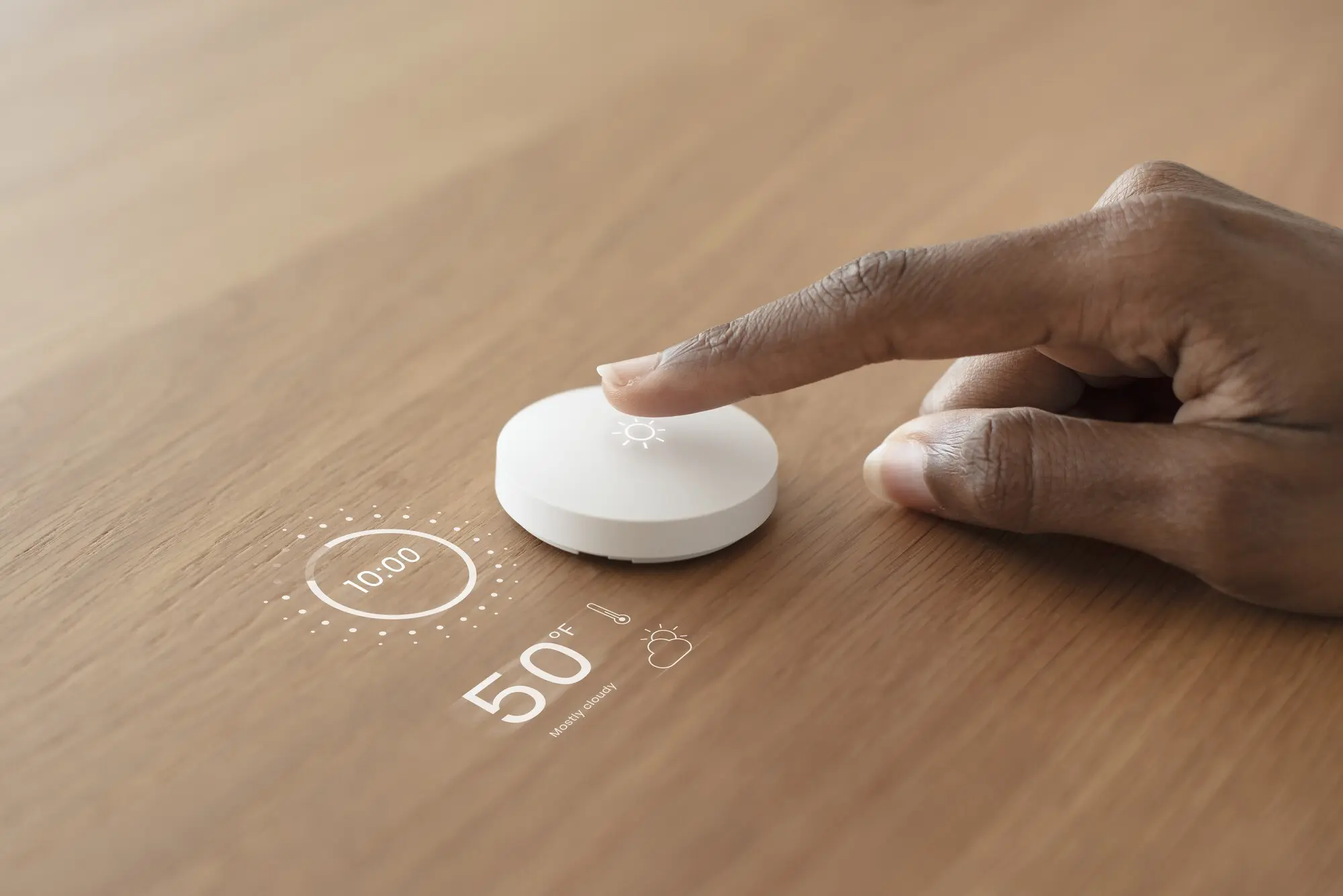
Underlay capacitive pads beneath thin oak, ash, or engineered stone to create invisible controls with tactile personality. A tiny brass inlay, hardly noticeable, anchors muscle memory. Seasonal humidity shifts require calibration, and grounding strategy matters. Done carefully, a dining table edge can become a dimmer where fingertips instinctively rest before conversation begins.
Display Minimalism: E‑ink, Projection, and Micro‑LED
Favor low-luminance surfaces that echo paper and daylight. E‑ink quietly displays timers on a pantry door. Short-throw projection washes subtle icons onto a credenza only when someone approaches. Micro‑LED clusters hide in trim, pulsing with barely-there guidance. Each output respects circadian rhythms, aiming for legibility without turning the home into a dashboard.
Interaction Cues You Barely Notice
Micro‑Gestures and Proxemics That Feel Natural
Use small reach, hover, and glance interactions that align with how people already move through hallways, counters, and reading nooks. A hand lingering above a shelf wakes softly glowing markers. Step two paces closer and the projected recipe grows. Calibrate dwell times to prevent accidental activation while maintaining the satisfying feeling of effortless intent.
Subtle Feedback: Glow, Whisper, and Vibration
Pick a primary channel per room, then add a quiet backup. In bedrooms, a low-contrast glow pairs with a fabric-softened chime. In kitchens, a tiny vibration under a cabinet lip confirms a selection. Redundancy prevents confusion without crowding senses. Residents feel reassured, not interrupted, and can ignore signals when focus matters.
Clarity Without Labels That Shout
Hints can be embedded in form. A slightly beveled rail invites a sliding action; a textured spot under a mantle suggests a press. During onboarding, temporary projections teach interactions, then disappear. Keep escape routes obvious with universal gestures, ensuring recovery after mistakes. The environment feels patient, instructive, and quietly confident under real-life pressure.
Stories From Real Homes
The Pantry That Listened, Noted, and Stayed Modest
A microphone hidden behind a linen panel captured grocery items only when the door opened, avoiding stray conversation. A discreet e‑ink strip inside confirmed entries with a tiny checkmark, never glowing at night. The family reported fewer forgotten staples and felt no surveillance. They said the cabinet behaved like a considerate helper, not a gadget.
The Sofa Arm That Dimmed the Evening
Conductive thread beneath a wool blend enabled a thumb sweep along the sofa arm to lower lights. Guests discovered it through a host’s casual gesture, then remembered easily. A barely visible seam marker guided placement. The living room felt cinematic without visible controls, and cleanup stayed simple—cushion covers detached for washing without disconnecting electronics.
Grandparent Mode That Honored Memory
A hallway handrail included two gentle touch zones: one summoned warm light, the other a favorite radio station. Large, forgiving targets and slow fade-ins respected steadier pacing. Physical overrides were always present. Confidence grew quickly, and visits became calmer. The family wrote that dignity rose because nothing looked medical or complicated, just comfortably familiar.
Edge Intelligence and Minimization by Default
Signals That Convey State Without Anxiety
Ethical Defaults for Shared Spaces
Rapid Trials With Tape, Projectors, and Microcontrollers
Wizard‑of‑Oz Sessions That Reveal Intent

All Rights Reserved.